Keynote by Josh Sawyer @jesawyer - live from DemoDay at TUM
Josh Sawyer gibt Einblicke in Spieleentwicklung


Transkription
Josh Sawyer von Obsidian Entertainment sprach über die Herausforderungen der Spieleentwicklung in kleinen Teams. Anhand des Projekts Pentiment wurde die Bedeutung einer soliden Vorproduktion, flacher Hierarchien und effizienter Prozesse erläutert. Die Teamdynamik und die strategische Planung sind entscheidend für den Erfolg.
Science & Technology
Einleitung und Vorstellung
00:00:00
00:00:00 Wie ihr könnt sehen, ich bin super nervös und super excited. Das ist der erste von ihrer Kindheit, der erste Lekture-Serie.
00:00:07 und ich bin so froh, dass Josh das Event beendet wird. Ich bin der super-new Professor, der noch nicht weiß, wie es funktioniert. Ich wollte diese Lekture in dieser Lekture Halle, weil ich finde, dass es die Bavarian-Berklärung ist, in der Lekture Halle. Ich bin so dankbar, dass so viele von euch hier aufstehen.
00:00:31 So again, this was very small, announced in a smaller circle. And I know it's a lot of you who took my course, but it's also so many who did not take the course. I'm very thankful for every single person showing up. And I'm so thankful for the entire team, like hello team, who actually made the...
00:00:53 Everything possible. So for me it's a very very exciting moment and I'm so thankful Josh came here just for two days to Munich and to present now his knowledge, his wisdom he gathered after 28 years of game development. 26. Rounded up to 30. 30 years.
00:01:14 So, this is for me a super special moment. I hope you will also enjoy this talk again. Josh is such a fantastic person in the game dev scene and an industry veteran. I hope you're gonna enjoy this and you're gonna learn as much. I constantly learn when listening to the presentation. And then...
00:01:32 Ich bin so excited, um mehr über die Projekte zu lernen. Die Demo Day wird später starten, die wir organisiert sind seit so vielen Jahren. Gutrun ist hier. Wir haben eine wirklich schöne Day. Ich bin so excited und so dankbar für ihn hier. Ich gebe es für Tosch. Moment bitte.
00:02:01 Hallo, Servus, Grüß Gott. Ich kann Deutsch, aber nicht so gut. Nicht gut genug von einer deutschen Universität. Deshalb spreche ich auf Englisch. Okay, hello. Welcome to Developing for Small Teams, new developer edition. I have given this talk before, but it was a few years ago, so I figured it was time to update it.
00:02:28 Was ist das? Ich werde primarily über die Entwicklung von einem Spiel ich auf dem, PentaMent, ein kleines Spiel in einer großen Firma. Wir haben mit einem kleinen Team gearbeitet, mit zwei oder drei Leuten gearbeitet und haben 13.
00:02:45 I'm going to be talking about what I believe are the best practices and pitfalls that I took away from this project that I think can be applied in general to small development teams. This is oriented toward newer developers, specifically coming out of a German university in 2026.
00:03:05 Who am I, if you don't know? My name is Josh Sawyer. I'm the Studio Design Director at Obsidian Entertainment. I started my career in 1999 at a studio called Black Isle, made role-playing games. That lasted until about 2003, when the parent company collapsed, and we all went our separate ways. I went to Midway San Diego, which was primarily a console developer, for a couple of years.
00:03:30 und dann re-Join most of my Black Isle teammates at Obsidian Entertainment, wo ich seit 2005 bin.
Zustand der Spieleindustrie
00:03:37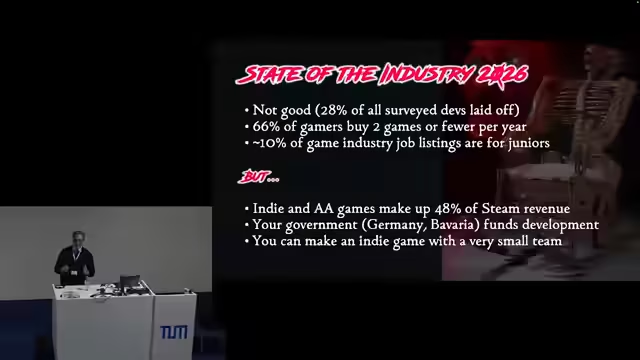
00:03:37 So, before we begin, I thought it would be remiss if I didn't talk a little bit about the state of the industry, which is much like a skeleton chair howling into the ether. Not good. So, GDC does a survey every year asking respondents basically how their employment is going, and 28% of all surveyed devs had been laid off in 2025. Not good.
00:04:05 Also, additionally, which is a crazy statistic, 66% of gamers apparently buy two games or fewer a year. So in general, people who play games are not buying as many games. Also, 10% of the game industry job listings are for juniors. Most of the rest of them are for intermediate or seniors. But, hold on.
00:04:29 Indie and AA games make up an increasingly large portion of the market. They make up almost half of all Steam sales.
00:04:37 You actually have a government that funds game development, which is amazing. I'm from a place called America. We don't believe in investing in things. So the fact that you actually have federal and state government that do invest in game development is amazing. I'm very happy for you. Also, you can make indie games with a very small team. You can make an indie game with one person, make it with three people, five people. Take your pick. There are many, many options.
00:05:06 Many incredible games that can be made with a very small team. I think in general there is an idea that probably shifting expectations toward developing in the indie space is probably healthier than trying to get a job at a A studio, which is an extremely hazardous environment right now.
Projekt Pentiment: Entwicklung und Teamstruktur
00:05:2500:05:25 So, now let's talk about some fun things. The background of Pentiment. The working title of this game is Missouri, so if you see references to Project Missouri, it's Pentiment. It entered pre-production in September of 2019. We did not know that COVID existed at this point, or at least we didn't take it seriously. We entered production in May of 2020. This was a very exciting time, 2020.
00:05:52 Wir alle waren remote, und so all of production happened remotely. Wir haben die Spiel in November 2022, so es war über drei Jahre alt. Wir hatten fünf developers in pre-production und dann 13 developers at peak production. Das ist nicht necessarily ein kleiner Team, aber es ist noch ein kleiner Team. Obsidian Teams, die jetzt für unsere große Games sind über 100 Leute, nicht including Outsourcers. So 13 Leute ist ziemlich klein für uns.
00:06:24 Now, the team structure was relatively flat because, again, normally our large teams have many, many layers of authority. So we have many producers and we have leads and sub-leads and sub-disciplines and a bunch of narrative designers and area designers and so on. Our team structure was relatively flat on this project because we didn't need all that hierarchy. We also were working across a wide range of time zones. Again, we started in studio, but we moved to remote work.
00:06:54 Wir hatten Leute, wenn du, du kannst, du kannst, du kannst, aber wir hatten Leute von den Westen aus den USA all den Weg zu Eastern Europe und so wir hatten vieles zu machen und handoffen als die Zeit aufgerissen. Ich würde, ich würde, ich würde, wach und ich würde in und habe über eine Stunde zu reden, zu sprechen zu Mertan Radicep in Estonia und dann, er würde, er würde zu beden.
00:07:17 und dann weiter. Wir sind immer in die Hand-Offs zwischen den Zeitzeichen.
00:07:25 Ich wollte einen Beispiel aus meiner Perspektive von wie small projects sind wie big projects. Ich denke, vielleicht habe ich einige Leute, dass wenn sie auf Indie oder small projects arbeiten, dass die Knowledge der Gain da ist nicht unbedingt an ein A-A-Games. Und während das eine sehr viel ist, ist natürlich ein Problem, dass eine große Rolle an sichern. All projects require Organisation. Just weil ein Projekt ist small, nicht dass man nicht um die Organisation ist.
00:07:52 Obviously, the logistical challenges are not as crazy as they are in a A game, but you still need to be organized, you still need to be disciplined about how you work to make sure that you get things done in a reasonable amount of time.
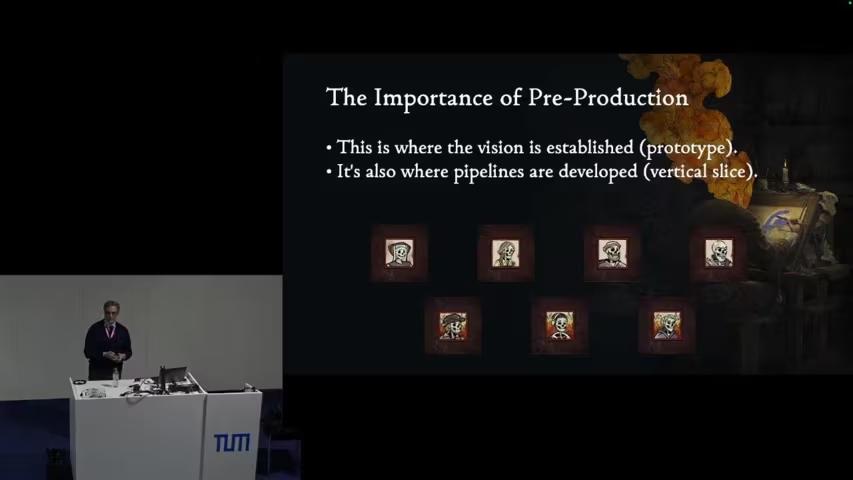
Die Bedeutung der Vorproduktion
00:08:05
00:08:05 Also, small projects should ideally follow the same phases of development as a A game. These being pre-production, this is where you're doing prototyping and creating a vertical slice. You should have production milestones where you're developing the rest of the game post-pre-production. You should have an alpha phase, a beta phase, and a release phase. What are these things? Let's talk about all of them right now.
00:08:32 So I'm going to talk about pre-production, because this is the foundation of everything. It is, in my opinion, the most important phase of development, because if you screw up your pre-production, I guarantee you that the rest of development is going to not go well. This is where the vision is established. As you make prototypes, you are creating this idea of what the game is going to be. You're not necessarily making it the way that you're going to make it in the end.
00:08:57 aber du musst dich über die Idee, dass das die Game ist, dass das Spiel wir versuchen. Das ist also wo du entwickeln Pipelines. So, nachdem du die Vision der Game klar hast, du hast dich, wie wir das. Das ist wie wir unsere Assets haben, das ist wie wir sie name, das ist wie wir die Memory. All diese Dinge sind die Pipelines, die du in der Vertical Slice prove aus. Denn wenn du nicht, und du es in Produktion machen, dann wird es ein Problem.
00:09:25 Ideally, this is also where you determine your scope. So, when you're trying to figure out how big of a game you can make, a good way to do that is in your vertical slice. You make this much game, and you go, it took us this long to make this much, so if we assume that we'll make it at about the same speed, we can make this much in this much time. It's not perfect, but if you don't start somewhere, again, you're going to have some problems. So all of these things are sort of foundational leading up to going into production.
00:09:56 The importance of a shared vision can't be overstated. Everyone on the team can have different values, but if you don't have a shared vision, you're going to be going in different directions and it's going to go very badly.
00:10:09 Ich will sagen, dass ich mich an einem Direktor auf viele, viele, viele Leute auf einem großen Team, ich werde nicht sagen, dass ich nicht, aber ein Direktor ist immer sehr wichtig, weil sonst alle anderen gehen in viele andere direkte. Wenn du drei oder fünf Leute hast, ist es einfach einfach zu arbeiten die Probleme in einem kleinen Grupp. Du musst nicht nur eine Person zu sein.
00:10:32 People almost always have more autonomy when you're working on a small team. Everyone has to cover multiple bases, they have to hand things off in terms of responsibility, so it's easier to sort of come to a collective understanding of what you're trying to do.
00:10:47 So that shared vision is still very critical for how you do your job. You should be defining your vision together. It should not be three or five people all coming up with ideas that go in different directions. You should be talking about this explicitly, saying this is what we're trying to do, this is the experience that we're trying to create.
00:11:06 Und, wenn du das Vision ausfügt hast, dass du das Video anstattest, dass du das in diesem Weg für dieses Audience hast, sollte man zurück zu diesem Vision sein. So, als du durch Produktion Milestones hast, du sollst du dein Vision Statement sagen, das ist was wir gesagt, wir sind zu tun. Sind wir noch nicht? Und wenn wir nicht, wollen wir unsere Stated Vision oder wollen wir die Game machen?
00:11:33 Hier war mein Vision für Pentiment in zwei Chunks. Pentiment ist ein Narrative-Adventure-Game mit Light-Roll-Playing-Game-Elementen, set in 16th-Century Bavaria.
00:11:46 und featuring a distinctive artstyle inspired by the Northern Renaissance. You play as Andreas Mahler, a university-educated artist who attempts to solve a series of murders in the fictional, not real, Kiersau, Abbey, and Town of Tassing over 25 years. I was very happy when this game came out and Bavarians were like, where is Tassing? I'm sure I've seen it somewhere. I tricked you.
00:12:10 So, there are a lot of things that are not in this vision statement. There are a lot of things that were part of the game that are not part of this statement. What the music will be like, that's not in the vision statement. All the weird fonts and writing effects, we had a lot of them. We had six custom fonts and a bunch of crazy writing effects. That's not part of the vision statement. How long the game will be? Don't know if it's three hours or 20 hours. Don't know how many characters are in the game, almost 200. How many animation rigs we will do? That's not part of the vision at all.
Prototyping und Pipeline-Entwicklung
00:12:40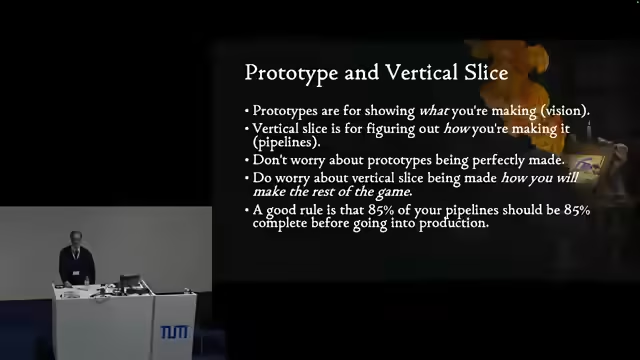
00:12:40 Whether or not we all have voiceover, we did not. How many languages the game will be localized in? All of these things are important. They don't need to be part of the initial vision. The vision is about establishing a core that you can work from, and you work out the details as you go. So within the prototype in Vertical Slice, you're kind of doing two distinct types of things. The prototype is for showing what you are making. So when you do this, often you are working very quickly.
00:13:09 und in eine sehr dirty und effizient fashion. Du bist nicht in eine perfekt-fähige Weise, sondern in eine demonstrativ-fähige Weise. Du willst deine Team-Mates und Publisher, oder Audience, oder was auch, was du type of Erfahrung zu machen. So die Fokus ist wirklich auf den Erfahrung zu fühlen. Du kannst du es über wie du es in der Execution wirst, in dein Vertical Slice.
00:13:35 Und ich habe einen Punkt. Aber ja, die Vertical Slice ist für die Erfahrung, das ist die Erfahrung wir haben, das ist wie wir es machen, das ist wie wir es machen, das wir können es machen, es wird performant, wir werden nicht zu tun, das ist die Vertical Slice.
00:13:51 You should not worry about prototypes being perfectly made. You have a lot of things to figure out in your prototype, and if you spend too much time on something trying to make it perfect, when it already accomplishes what you set out to do, you're gonna burn a lot of time and energy. It's better to move on to another prototype that demonstrates something else than trying to keep refining one element of it.
00:14:16 You should worry about your vertical slice actually being indicative of how you build the game. Because if you don't and you go into production, then you're going to spend a lot of time redoing that and figuring it out over and over again, and you're gonna be really sad, and everyone's gonna cry.
00:14:35 In my opinion, 85% of your pipelines should be 85% complete before going into production. What this means is almost everything. Almost everything is most of the way done. I think it's kind of silly to suggest that everything should be completely done because it's not practical. But if it's not mostly done and if almost every crack is not filled in,
00:15:03 you're not on a good foundation and you're going to have trouble as you go into development. I made this up. It's just based on my personal experience. Whenever we have gone into production and things are like half done and like half the stuff is figured out, we waste a lot of time. We can't actually produce the content of the game because we're still trying to figure out exactly what type of game we're making and exactly how we're doing it. So just, why don't you just trust me on this one?
00:15:35 The principle behind this is that it's impractical to take 100% of the stuff you're doing to 100% in pre-production. There's a lot of stuff going on, and there's always going to be stuff that you figure out as you go. That's okay. Don't be irresponsible, but don't obsess over getting literally everything done. It is irresponsible to not figure this stuff out, though, so you should put effort into that 85 at 85.
00:16:01 Figure out the details later. Let's say you have a pipeline all figured out, your character pipeline. Figure out how you're gonna do concepts, model the characters, rig them, animate them, and then you're like, how are we gonna tag the animations for audio?
00:16:17 You don't know. That's okay. That's your 15% where you go like, okay, just put a little bookmark on that. We will figure that out later. But every step of that can't be ambiguous. You have to pretty much have everything else figured out. Yeah, figuring out the basics and redoing stuff as you go is not reasonable. It's not good. People will get really mad. You will be very sad.
00:16:43 Und remember, wenn du in Produktion bist, wenn du deinen Engenern oder du deinen Animator oder du jemanden und sagst, bitte zu re-doen, das Pipeline ist das Zeit, dass sie nicht mehr machen. All das Zeit, dass sie für sie zu machen, was sie zu machen, ist es, weil sie zu machen, was sie zu machen. Das ist warum, dass ihr Pipelines richtig ist. So, Pentiment's Fonts sind ein großes Spiel in der Game.
00:17:16 I knew that fonts were very important to the type of experience we were trying to make, so we prototyped our fonts very early to see if they were readable, because we were using very kind of old-timey fonts, and we wanted to see how much variety we'd get out of them. So we prototyped them very early. The end solution for how we used fonts came after the vertical slice, but we had a high degree of confidence in how we were going to do it.
00:17:44 So there were a few questions that remained to be answered, but we pretty much had it figured out before we went into it. Here's an example of something I did not do well, which is our 3D scenes. Pentiment is almost entirely a 2D game. The exception is our main menu and the book, the journal in which you are sort of playing the game, is a full 3D real-time scene. I sort of said, yeah, there's going to be a book.
00:18:14 Und es wird mit den Gäben, die von den Gäben und Marginalia sein können. Und es ist auf eine Desk. Es wird gut sein. Es war sehr vachlich geplant. Ich wusste, dass ich diese Idee habe, aber wir nicht aus den Details zu verarbeiten. Und wir haben die Staffen, die wir für eine 2D-Gäben haben. Wir haben nicht wirklich 3D-Modellers und Animator auf die Team.
00:18:40 Wir hatten die tech, wir hatten Unity, aber wir waren sehr viel auf Spline für alle 2D Sachen. So was wir werden?
00:18:50 Das war die einzige größte Feature in der Spiel. Wir planneden für alles, wir pretty much alles cleaned up, aber das Ding kept uns in den Assen all die durch die Entwicklung, und das war die 15% das wir nicht figurenter. Das ist nicht so, es war nicht so, aber das ist ein Beispiel wie etwas, das kann man sich nicht ausführen kann, dass es ein Problem ist.
Zusammenarbeit und Teamdynamik
00:19:18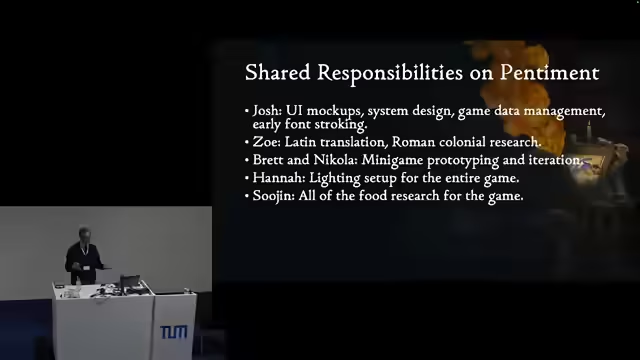
00:19:18 Ich möchte über die Frage, wie man zusammenarbeiten und die Team fit ist, das ist wichtig für eine kleine Team.
00:19:25 Du kannst nicht mit anderen arbeiten, wenn es drei Leute auf dem Team gibt. Wenn du nicht so gut bist, oder du hast einen Problem mit ihnen, dann hast du eine wirklich schwierige Zeit. Wenn du auf einem Team mit 80 Leuten bist, wenn du sagst, ich bin nicht so gut, dass du das Leute nicht so gut bist, dann ist das einfach nicht so gut. Ich bin nicht so gut, aber es ist ein solvierter Problem. Auf einem kleinen Team, du kannst wirklich nicht so gut machen.
00:19:52 Es ist wichtig, dass auf ein small Team nicht alles zu tun. Das ist okay, alle haben verschiedene Opinions. Aber du musst dich aufhören und sich aufhören und einen gespeichern. Und eine sehr freundliche, working-einrichtung. Du musst mit jeder einer dieser Leute arbeiten, wahrscheinlich jeden Tag. Ja, mehr als auf ein larger Team, es ist wichtig, dass du alle zusammenarbeiten, jeden Tag, wahrscheinlich für Jahre, über und über.
00:20:21 Alright, so this is a new slide I put in here, which is I wanted to say that good teamwork is better than your favorite game idea. And by that I mean that everyone on a team is going to have their own preferences. There were two people on Pentiment that really explicitly told me they were like, I don't like this game. They're like, I do not like this. I'm not into the style of game. It's not my thing. I get what you're doing, but it's not my thing.
00:20:50 Und ich war, wie gesagt, dass es gut ist. Ich sagte, dass es gut ist. Das ist gut. Wie sind Sie happy, die Sie in der Spielartigkeitschaften sind? Ja, es sind. Und so wir waren able, dass wir eine sehr niche 2D, light RPG-adventure, murder-mystery-game mit einem sehr distinctive artstyle und dass ein paar Leute auf dem Team nicht in die Spiel war, das ist gut. Wir alle zusammengekommen, wir alle zusammengekommen, wir alle anderen anderen Tests und die strengths wir gebracht haben.
00:21:18 Es ist okay. Wenn du auf ein Spielwerkstattst, wenn du einfach nur startstattst, kannst du nicht unbedingt haben, was du genau was du machen, wenn du mit anderen Leuten auch alle anderen wollen. Ihr erste Spiel vielleicht nicht, ich will sagen, wahrscheinlich nicht, ist dein favorite.
00:21:38 You should really prioritize developing with people that you enjoy working with. Over the years, what I have found is that even when you are not super into the thing that you're working on, if you love working with your team, it's a lot better. Actually, I would say it's even better. Working on your dream game with people you can't stand is terrible. It sucks. Working on a game that you're kind of like, this is fine, but I love my teammates.
00:22:07 Das ist gut. Und was ich würde sagen, wenn du in eine Situation bist, das ist nicht mein Spiel, das ist nicht mein Spiel, das ist nicht mein Spiel, dann versuchen wir mit dem Team zu finden, ich wirklich mag das Spiel. Wir hatten einen Programmer, der wirklich magst du mini-games. Er war nicht super into die game, aber er magst du mini-games. Und ich sagte, go auf. Hier sind ein paar mini-games, ein paar Puzzles, und ich hatte einen wirklichen Puzzle. Ich hatte einen Puzzle, der Erbhut Puzzle war, und der Original Version war das schon weniger als das, was das.
00:22:38 Und so der Programmierer war, ich habe eine Idee. Und er hat gesagt, ja, das ist besser. Das ist gut, das ist gut. Ihr Idee ist besser als ich. So er hat eine gute Zeit, in spite of nicht wirklich being that into the game. Es passiert.
00:22:51 Ich will sagen, dass wenn man auf eine kleine Team ist, jeder muss, zu einem bestimmten Stufen, werden die Jack-of-all-Trades. Even small games sind ziemlich großartig. Es gibt so vieles, so viel Text, so viele Files, so viele Scenes, Triggers, und Scripts. Es gibt so vieles. Es gibt so viele Dinge, die müssen zu tun, einmal.
00:23:13 So, everyone has to be flexible about what their job is. On large teams, things can get very siloed. You can have people where I do combat gameplay programming, that is literally all I do. I will never look at another line of code outside of this specific type of gameplay. Or I am the guy who just does ambient audio. I do ambient audio across the whole game. That is not the reality on a small team. Everyone has to kind of be able to pick up and handle anything.
00:23:42 Diese waren die Werteilung auf Pentiment.
00:23:46 Ich habe alle die UI-Mockups gemacht. Ich habe auch, zu dem wir haben, all die System Design gemacht, ich habe die meisten der Game Data gemacht und ich habe die Early-Font-Strocken gemacht. All unsere Fonts, die nicht printed sind, waren eigentlich stroked, stroke-by-stroke. Wenn sie schreiben, dann sehen sie sie in real-time. Ich habe eine System für das gemacht und ich habe gesagt, wie das? Und die Programmer sagte, das ist doch dumm, aber hier ist eine bessere Idee.
00:24:15 Und ich sagte, ich habe es nicht. Ich habe das erste Mockup gemacht, damit sie die Idee verstehen. Und dann, mehr Leute in fact, die es nicht mehr gemacht haben.
00:24:27 Zoe Franznick, die wir zum Team ein bisschen später haben, war ein Latin. Ich weiß noch ein Latin, aber nicht sehr. Es war besser, dass wir eine Wriertin auf dem Team haben, die eine Master's degree in Classics hat, und sie konnte almost all das machen. Sie hat viel von der Roman-Colonial-Research. Ich habe eine Erfahrung in German-History, aber nicht Roman so viel. Sehr gut. Brett und Nikola, die wir uns Programmieren, haben wir alle.
00:24:55 Minigame Prototyping in iteration.
00:24:58 Hannah ist die Art Direktor. Sie hat die Einrichtung für die ganze Spiel. Das ist nicht etwas sie war es zu tun, aber wir haben in eine Situation, wo halbwegs durch Act 2 nichts war in der ganze Spiel war. Hannah war so, ich habe alles und ich habe alles gehalten. Ich habe alles gehalten und ich habe alles gehalten. Ich habe gesagt, sind Sie sicher? Das ist viel Arbeit. Und sie hat gesagt, ich habe es einfach gemacht. Und sie hat gesagt, ich habe es gemacht. Und dann hat sie sie gemacht. Und dann hat sie sie gemacht. Und dann hat sie sie gemacht. Konzept Artist Sujin war sehr excited. Sie war sehr interessiert.
00:25:27 Und so, sie hat 16th-century FOOD, das hätte ich in dieser Region gegründet haben. Und dann hat sie all das. So, die Leute volunteered und handelt das alles auf, als sie wollten, und es funktioniert sehr gut. An wichtigsten Frage auf eine kleine Team hat sich mit, ob Sie eine Produktion brauchen.
Organisation und Produktion in kleinen Teams
00:25:47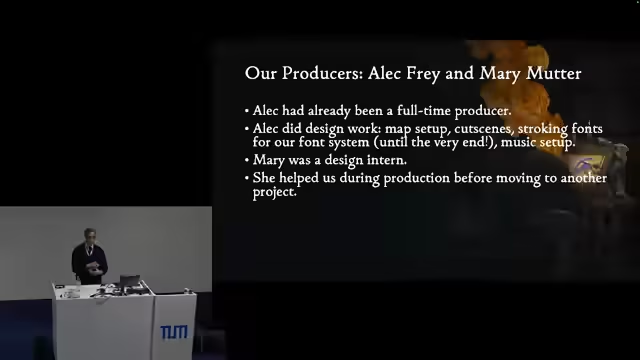
00:25:47 So, Producers do important work, and I will actually go a step further, because we were having a little blue sky discussion the other day about Producers and what they do. The work that production as a discipline does, somebody's gonna do it. Like, if it doesn't get done, the game's not getting done. So, production work is vital to actually getting the game done. They do schedules, tracking, what work is actually done or not done, organizing and running meetings if you have meetings.
00:26:16 Ich liebe mich. Lissens und Kontrakts. Wenn du es mit dem Musik oder ein Art, oder etwas, muss man einen der Handlung der Kontrakts. Und auch mit einem Publisher. Wenn du eine Publisher hast, eine Person sollte mit einem Punkt auf Kontakt mit ihnen sein. Das ist alles, dass man einen Punkt auf dem Weg muss.
00:26:39 Wenn du auf eine kleine Team werdetst, ist es sehr einfach zu sagen, wir haben drei Leute hier, wenn einer ist ein Produzent, das ist eine-durchsache unserer Zeit. Das macht nicht viel Sinn.
00:26:52 Aber das muss man sich damit gemacht. So, jemand oder jemanden werden müssen. So, du hast ein paar Optionen. Du kannst jemanden in der Produktion role, aber sie machen andere Arbeit. So, sie sind nicht nur ein Producer. Again, Leute haben viele Hatsen auf dem Team, so das ist nicht ein crazyes Ding. Ideally, die Producers machen ist nicht load-bearing, sondern es ist Supplemental.
00:27:17 Weil der Produktion muss passieren, wenn es muss. Wenn Leute warten, dann ist das ein Konflikt. Es gibt ein paar Supplemental-Arbeitungen. Ich habe das ein paar Spiele gemacht. Ich habe das ein paar Spiele gemacht. Wir haben das ein paar Produktion, Alec. Er hat eine Art von der Fonte in der Spiel. Und wenn er hat fünf, zehn, fünf Minuten auf dem Zeitpunkt, er hat eine Stroke Maske. Und dann ein Produktion-Task kommt und er hat gesagt, okay, never mind. Und da ist ein paar Informationen zu tun.
00:27:46 und es war toll. Er war gut. Er war das, aber es war nicht zu halten.
00:27:53 You can also have a producer position, but it's a part-time job. So, for example, this could be someone who's internal, it could be someone who is contracted. This is a person that's essentially working not a full week on your project. They just do the work that's required for the production tasks to get done. They check in on scheduling to make sure there aren't conflicts. They handle that coordination with publishers. They just make sure the work is done, but they're not necessarily a full-time core member of the team.
00:28:24 Sometimes producers at publishers can take on that work. That's a little tricky. The publisher's priorities are not your priorities. And I'm not gonna get into a whole thing about the publisher being your enemy, because they're not really, but it's an adversarial relationship at times. So if you offload that stuff to them, they will do it the way that is most beneficial to the publisher, which is not necessarily the most beneficial to you.
00:28:54 Die letzte Art, die du kannst, ist, dass du alle die Verantwortung, die sie auslesen, dann alle die Team share die Verantwortung. Das ist schwierig, aber es ist natürlich eine Art, die du kannst. Ein paar Teams enden das in Practice machen, weil sie einfach nicht wollen, sie nicht wollen, sie haben sie einen Spitzenden, sie einfach sagen, ich werde das, das und das, und das. Und du kannst.
00:29:19 So we had two producers, one full-time one who was only on the project for a few months, Alec Fry and Mary Mutter.
00:29:27 Alec hat bereits ein Full-Time Produziert der Studio für ein paar Jahre. Er hat auch ein paar Design-Arbeit gemacht. Er hat auch ein paar Design-Arbeit gemacht. Er hat die Kutscene-Arbeit in Unity gemacht. Er hat die Fonds gedroht, und er hat die Musik-Arbeit gemacht. So, als Musik kam, er hat alles in den Haken gemacht. Diese waren alles, was nicht blocken andere Menschen. Er würde einfach aus dem, als er sie zu kommen.
00:29:54 Mary was a design intern, but she was used in a production role for a while in the project. She helped us during production before she moved on to another project. So basically once she came on, that allowed Alec to do a little bit more design work while he mentored her in production. Great. So when you get into production...
00:30:15 In der Phase, in der du wirklich die ... Was ist das hier? ... die Partie der Game-Developmung, in der du wirklich die Game-Developmung, in der du wirklich die Game-Developmung, in der du wirklich die Pre-Produktion hast, in der du wirklich die Lion-Share-Deutschstufe. 1. Make-sure-debt die Critical-Things, die die Leute-Deutschnecht sind, sind die Dokumentation. Ich spreche über Dokumentation in ein bisschen, aber Dokument bevor du start, denn wenn du Dokumentation hast, es wird ein bisschen schwierig. 2. Keep-debt-debt.
00:30:45 Ich denke, die smaller teams machen das besser als die größten. Die größten sind manchmal getrennt in die Gespräche. Aber wenn du ein paar Leute hast, du bist wahrscheinlich am besten, wenn du nur die Arbeit machst. Und du solltest mit einem anderen, aber du solltest nicht immer in die Gespräche, weil du einfach nicht so viele Leute hast.
00:31:05 Und Ihr Energie soll auf Features und Content, nicht Pipelines. Das geht zurück zu was ich gesagt habe, wenn du nicht gut ein Grund für wie du den Spiel hast, wenn du es gut anstellt, wenn du es gut anstellt, du re-döntest, vieles zu vieles anstatt.
Dokumentation und Meeting-Kultur
00:31:20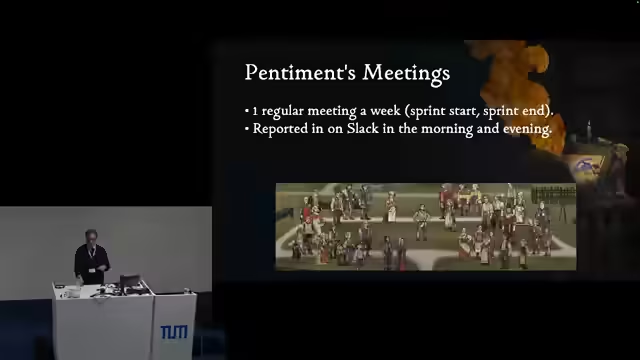
00:31:20 Documentation, ich will be clear about this. Wenn du documentierst, chill out. Du überdocumentierst du das. Du bist für klarer. Du bist nicht für ein Pulitzer Prize oder wie, wie du, wie gesagt, für die Worte geschrieben über eine Design Documentation. Du bist so dass andere Leute auf dem Team verstehen, was du und wie du es tun.
00:31:45 Es sollte klar und komprehensiv sein, nicht exhaustive sein. Wenn die Leute verstehen, die sie die Meinung verstehen, dann geht es nicht. Du bist nicht ein Design Document, du bist ein Game. So die Document ist ein means für die Game, die dann wird es. Put ihr effort in die Game, nicht die Document. Don't überdocumenten Dinge. Small Teams können sehr leicht vermittelt informally.
00:32:12 Das heißt, es bedeutet, dass es nicht alles nicht so gut ist, aber oft, wenn man sagt, ich werde drei Tage schreiben, ein Dokument zu haben, kann man auch einen Shorten Meeting sagen, das ist wie ich möchte, ist alles okay mit dem? Und die Leute bringen ihre Objekte und sagen, okay, ich werde es so machen, so das ist wie wir werden. Cool. Und dann senden Sie eine e-mail, sagen wir haben, wir haben das gemacht und wir machen es so. Das ist die Möglichkeit.
00:32:38 Just make sure things are written down somewhere, somewhere durable, not Slack. Don't write it down in Slack. Put it in Confluence, put it in a doc, put it in an email, a durable electronic medium durable. Remember that teams can change over time. I mean, I know that we all love to believe that when we form a team, they are going to stay together, ride or die from beginning to end. That doesn't happen. Life happens. People have to leave. You have to bring new people in. When you bring them in,
00:33:07 Es muss ein bisschen documentation helfen, es kann nicht alles von Wort-of-Mouth sein.
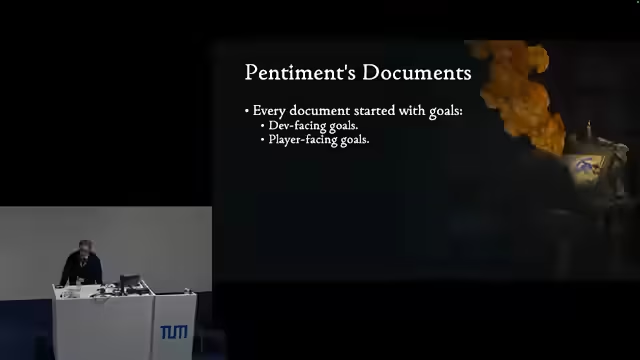
00:33:16 So, our documents followed what is more or less a standard at Obsidian. Every document, every design document rather, about features or characters or story started with a goals section. So it would be a summary. This is what this document is. That's one sentence. And then goals were broken up into two types of goals. There are only, in my opinion, two types of goals that matter at all. The first...
00:33:44 ist Spieler-Facing Experiential Goals. Wir wollen die Spieler zu fühlen, wir wollen die Spieler zu beherrschte, aber dann haben sie eine Art von Mastery als sie überkommen es. Wir wollen die Spieler zu wirklich engagieren, mit der Mathen und der Krunch in es. Diese sind all die Dinge, die wie die Spieler... Sie werden etwas in der Fronten einstellen, und die Spieler wird es.
00:34:12 your fellow developers how you want the player to experience that because the game itself is a means to delivering that experience and when someone reads through your design document if you don't state what you're trying to do you're making them guess from what you're saying in the design document it's way better for you to say I'm trying to do this and this is how I'm trying to do it the reason why this is important is
00:34:38 Wenn ihr Team nicht in die Experienzial-Goal glaubt, zum Beispiel, wenn jemand sagt, ich will den Schwer der Schwerer aus dem Spieler sagen, ich will nicht, das ist nicht ein Schwerer-Game, wir sind nicht zu schweren, das ist nicht was wir zu machen, das ist nicht was wir zu machen, das ist nicht was wir zu machen, das ist ein, wir sagen, das ist ein, das ist ein, das ist ein, das ist ein, das ist ein, das ist ein, das ist ein, das ist ein, das ist ein, das ist ein, das ist ein, das ist ein, das ist ein, das ist ein, das ist ein, das ist ein, das ist ein, das ist ein, das ist ein, das ist ein, das ist ein, das ist ein, das ist ein, das ist ein, das ist ein, das ist ein, das ist ein, das ist ein, das ist ein, das ist ein, das ist ein, das ist ein, das ist ein, das ist
00:35:08 There are a lot of different ways that you can accomplish it. If you don't agree on the goal, you have to talk about the goal. The other type of goal that's important is dev-facing goals. For example, we want to allow the audio engineers to get as many... We want to allow them to get voice lines. We're going to have hundreds of EO lines. We want them to be able to easily get them into the build with minimal friction because they're going to be doing it over and over and over again.
00:35:35 So if you say that explicitly, then people understand that the things you're talking about in your document are to achieve that end. So they don't suggest doing something different that doesn't accomplish that goal. If you don't accomplish the goal through different means, you're focusing on the wrong thing.
00:35:53 Most of the feature documents I wrote were under four pages. I just, in very basic terms, described this is what I'm trying to do with it, this is how I think we should do it, if you disagree, just let me know. And they did. And then we would implement it, and from there we were talking about what's in the game, not what's in the doc.
00:36:13 Learning the basics through the documents was very easy because there was not much to read. If you expect that your teammates are going to read more than five pages, ten... I know I'm talking to a group of university students, but game developers are not good about reading documentation, so do yourself and them a favor and keep that documentation short.
00:36:41 Updating your documents was also easy because there was not much to update. They were brief.
00:36:47 Ich habe viele Erfahrungen über die Organisationen. Ich werde jetzt über die Frage nach dem jetzt. Für eine kleine Projektion, ich denke, dass du viele verschiedene, die sich in den Fällen und Subfolder und Dinge zu machen, die Leute suchen. Make alles sehr flat. Make alles sehr einfach. Make es einfacher und einfacher zu finden. Wenn Leute zu finden, sind sie nicht gut.
00:37:13 Anytime something is no longer relevant to the project and it shouldn't be updated, it should be deprecated. It should actually be removed from wherever you store your documents and put somewhere else. Because if you do not, what will happen is someone will go and read your old ass document and go, wow, we're doing it this way. And you might be saying, oh, we decided six months ago that we're not doing that. Okay, but I just came to the team and this document is still in Confluence.
00:37:41 Move things out when they're no longer relevant to the game you're making. Documentation should be brief and focus on goals. I think this is a good practice for all teams, whether they're big or small, but it's especially critical on small teams.
00:37:56 Details are gonna come through direct communication. So if I say, here's my idea, here's how I want to do it, everything after that point is gonna be the people who implement it talking to me and saying, okay, I read this, it's a cool idea, I think you don't understand how this works, so we're gonna try to do it in this other way, but it's still gonna do this thing. And then I go, okay, let's try it out. And they put it in the game, we look at it in the game, and then we iterate on it from there. We're not, you know...
00:38:24 Basically getting lost in document land. The game is the thing that we work on. Talking and working. Small teams are often very socially close. You kind of more or less have to be to a certain extent because again you can't be completely isolated. Many meetings can be informal. There are exceptions to this of course, but often when we were a five person team there was just one slack channel and we would just everything was in there.
00:38:54 Es kann sich die Dauer in Informalität, weil die Leute denken, oh, du verstehst, du bist, du bist, du bist, du bist, du bist, du bist, du bist, du bist, du bist, du bist, du bist, du bist, du bist, du bist, du bist, du bist, du bist, du bist, okay, whatever. Du solltest, wenn du dich über die Schatten und wenn du eigentlich eine Formal Meeting hast, und wenn du eigentlich eine Formal Meeting hast, dann machen das klar.
00:39:16 Our meetings were pretty brief, and we didn't have many of them. We had one regular meeting a week. So in terms of us actually getting into a Teams call, we did that once a week as a whole team. Now, if individual people wanted to talk to each other on Teams, they could do that whenever they want. Those weren't really meetings, those were just people saying, hey, let's talk about this. So we had a Sprint start, and we had a Sprint end. So on Monday, we would have our Sprint start.
00:39:44 und dann, am nächsten Thursday, haben wir die Sprint End. Every morning and evening in Slack, wir sagen, hey, ich bin auf das und das. Und dann, am Ende der Tag, wir sagen, ich war, ich war, aber ich habe mich auf das, aber ich habe mich getrennt, und ich habe das. Und die purpose für das...
00:40:03 ist, dass Leute einfach wissen, was du. Manchmal sagt man, ich werde das, und dann sage ich, oh, crap, wir sind nicht das, wir sind nicht das, wir sind nicht das, wir sind nicht das, wir sind nicht das, wir sind nicht das, wir sind nicht das, wir sind nicht das, wir haben uns nicht das, wir haben uns das, wir haben uns das, wir haben uns das, wir haben uns das, sehr gut, dass Leute einfach wissen, und ich bin ein Bullitt, ich bin ein Werk, ich bin ein Charakter, ich bin ein Modell.
00:40:31 Wir würden manchmal haben drei-personen Meetings sehr, sehr infrequently. Das würde dann immer 30 Minuten oder weniger. Es war wirklich sehr schwer, dass die Meetings nicht länger als das. Anything das war larger als diese informale drei-personen Chats hatte eine aktuelle Agenda, das sagte, das ist was wir versuchen, und das ist was wir sprechen, und dann, am Ende, wir kommen zurück zu diesem Problem, und wir sagen, das ist wie wir die Problemen.
00:41:01 Give your meeting structure. This is maybe a diversion, but I don't know how many of you have been in a lot of meetings, probably especially in the Zoom era, where there's a bunch of people in the meeting, and you don't have an agenda, there's a general idea of a subject, and two of seven people talk for 45 minutes while you all go like this, and you avoid letting them notice that you're watching something on Netflix on another monitor.
00:41:29 Das ist weil die Strukturen nicht haben, die nicht direkt haben, sie einfach fühlen wie ein Wastes von Zeit, weil sie sind Wastes von Zeit. Be serious über deine Zeit und tatsächlich run deine Meetings. Wenn jemand in die Lage ist, der eine Frage ist, das ist was wir sprechen, das ist wenn wir sprechen, und wir werden über das Ganze über das. Es geht nicht um mich über das Thema, aber es geht nicht um es einfach um es zu befreform.
00:41:57 You should have a short agenda. Again, this is a bullet point that says, we're trying to figure out how we're going to light the game because we don't have any lights in the game.
00:42:06 Wir werden über diese Lösung über fünf Minuten reden. Wir werden über diese Problemen die Programmen kamen mit. Das wird über zehn Minuten reden. Dann Hannah wird über die Lösung über das. Wir werden über das. Und dann, in der Endeffekt, werden wir über das tun. Das ist ein Agenda. Es dauert zwei Minuten zu schreiben. Und dann, alle die die Meetingen sagen, okay, ich verstehe was wir, ich verstehe was wir, was wir sprechen. Und dann, hopefully, ideally...
00:42:33 Du hast einen Plan für einen Plan? Wenn es so ist, dass alles neu kommt? Wenn es so ist, wenn du etwas anderes mit dem Plan? Dann document es. Document es. Write es, nicht einfach in Slack.
Team-Aktivitäten und Moral
00:42:58
00:42:58 Ich will jetzt mal über Team Activities. Ich denke, wieder, Video Games sind nicht wirklich Social Clubs, aber ich denke, dass ein Social Activities zusammengefasst kann, kann auch sein. Es war für meine Team und es ist auch für meine Team. Es ist einfach mit Small Teams, weil es nicht so viele Leute gibt. Wir können sie in Person oder online machen. Wir haben beide. Wir haben beide. Wir haben beide.
00:43:21 Eine easye Sache ist einfach nur die Reference Games und Reference Movies. Also sagen wir, wir sind wirklich die Reference von Red Dead Redemption 2. Okay, so was? Was ist das eine große Spiel? Oh, es ist speziell die Lichter oder wie sie ihre Cutscenes machen. Oder wie sie sie eigentliche Handeln. Und dann kann man streamen die Game und Leute gucken, und dann sprechen die Game und dann über die Leute zusammen und dann über die Game.
00:43:48 Das ist ein Schared-Gesetz, das ist um die Spiele, die du machen, das gibt es eine Reference. Wir haben das ein paar Jahre gemacht. Wir haben das ein paar Jahre gemacht. Wir haben das alles sehr relevantes gemacht. Und dann haben wir uns gesagt, dass es Black Death hat. Das hat nichts zu tun mit Pentiment? Nein, es ist Sean Bean, der Psychotinik. Aber wir haben es auch einen Spaß gemacht. Wir haben auch einen Spieltrips. Und wir haben auch einen Spieltrips, die wir auch noch viel Spaß haben. All das macht es um Morale.
00:44:16 und common reference points. Well, at least it built morale on our team. And common reference. So when I say, like, hey, Name of the Rose, we all watch Name of the Rose, we're like, okay, I understand that character. When we talk about, you know, the art at the Getty Museum, we all went to the museum and looked at it together. So we're all talking about the same thing. What am I looking at here? Okay.
00:44:39 Ja, so we did field trips, we drove up to the Getty Museum, we looked at their manuscript collection, we watched tons of reference movies, it was great.
00:44:51 Also, es kann auch fun, wenn du ein paar Spieltrips machen kannst, wenn du mit deinem Team-Mates hast, wenn du einen Tag mit deinem Team-Mates hast. Wenn du einen Tag mit deinem Team-Mates hast, dann wird es auch ein paar Leute verändern. Und manchmal werden sie nicht verändern, und natürlich nicht jemand ist obligiert, dass sie etwas nicht mehr tun wollen. Aber ich finde oft, wenn du diese Sachen hast, dass ich Dinge über meine Team-Mates habe, dass ich nicht mehr wissen, und sie lernen, Dinge über mich. Und das hilft uns zu verstehen und kommunizieren und besser.
Produktionsphase und Umgang mit Umfang
00:45:2200:45:22 Ich will sagen, dass das eine andere Sache ist, dass als du developing und wenn du in Produktion bist, es sehr wichtig ist, dass wenn du starten, dass du auf-trakst, dass du zu cutten, oder du zu spätigen, dass du zu spätigen, oder du zu spätigen, dass du zu spätigen, dass du zu spätigen, dass du zu spätigen, dass du zu spätigen, dass du zu spätigen, dass du zu spätigen, dass du zu spätigen, dass du zu spätigen, dass du zu spätigen, dass du zu spätigen, dass du zu spätigen, dass du zu spätigen, dass du zu spätigen, dass du zu spätigen, dass du zu spätigen, dass du zu spätigen, dass du zu spätigen, dass du zu spätigen, dass du zu spätigen, dass du zu spätigen, dass du zu spätigen, dass du zu spätigen, dass
00:45:49 Small teams don't have the ability to adjust their output very easily because they're small. There's only so many people. You only have so much time in a day. Nothing, I will say this from experience, nothing gets faster in production. Do not assume that a thing that you did in pre-production is going to be faster. Here's the exception. If you have measurable proof that a thing has in fact gotten faster, then you can use that as a new baseline. But don't...
00:46:17 Wenn wir uns eine Woche zu bekommen, eine Charakter durch die Charakter-Pipeline zu bekommen, dann wird das in der Produktion gehen in drei Wochen.
00:46:28 Warum? Based on what? I see people do this all the time though, and then they go in and they're like, damn, we're over by a week every time. Like, yes, because you take a month to make a creature. Anyway, nothing gets faster in production. So if you're a third or halfway through production, check how long things are taking in reality, not what you predicted, but what's actually happening. You can cut your content or features, or you can staff up, you can hire people on.
00:46:57 You can contract people externally, especially if it's a momentary shortfall.
00:47:03 Wir haben zu cuten, und wir haben zu staffen. Es gab viele Dinge, die wir haben. Wir hatten Covid-19, wir hatten viele Teams, viele Dinge zu tun. Wir haben eine große Menge an den Regen zu haben, und wenn Animation gesagt hat, hey, das wird 19 Regen und es wird das lange dauern, ich sagte, wie wenn 80% der Frauen in der Stadt sind auf eine Regen? Und Animation sagte,
00:47:30 Wow, that's easy. Great. Awesome. We just saved weeks and weeks of time. Great, let's do that. After Act 1, so we had four suspects in our first act. It's a murder mystery. In the second act, we initially were going to have four. I'm like, every suspect is so much work. Let's just take it down to three. So we cut it down to three. That made a big difference.
Charakterbasierte Szenen und Skalierung des Entwicklungsprozesses
00:47:5100:47:51 After Act 1, we also unified all the ending sequences. So at the end of our first act, we have a different execution scene for every character, and that was a huge amount of work. And we said, let's not do that much work for the end of the act. We still kind of did. But they weren't different for each character. It was expensive, but not as expensive as it would have been if we hadn't made that change.
00:48:14 Und dann, nach Act 2, und das war ein Qualität, das die Leute haben, aber wir haben uns nicht die Zeit, um die Zeit zu finden, in der 3rd Act zu haben. So wir haben die 3rd Act mehr als eine Art, weil wir, für praktische Worte, wir konnten nicht alle die Arbeit wir haben, das ist die Art. Das ist die Art.
00:48:36 Also, mein main writing partner, Kate Dollarhyde, went to another project for a while. So I was like, I'm the director of the game, I can't write all this myself, I need more writing help. So we hired Zoe Franznick and Merton Radicep.
Kreative Lösungen und Personalstrategie
00:48:51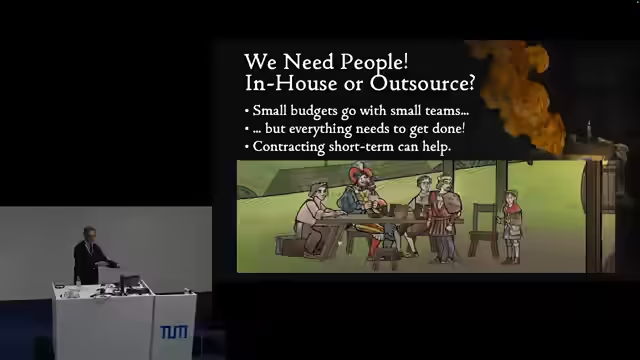
00:48:51 Additionally, we had a slight concept art shortfall. Most of our art was covered. We were feeling pretty good about it. The one place where we were not tracking well was in our environment scenes. So we were gonna do winter versions of... Because we decided, like, okay, we're gonna do a winter version of the town, and we just didn't have the time for it. So we had her or I had seen this artist online, Emily Cheeseman.
00:49:17 Wir fragten ob sie war, ob sie zu tun, und sie sagte, dass sie so. So unsere Lead Artist gab sie eine Reference Packet und sie hat alle Winter Scenes gemacht. Und es hat wirklich gut gemacht. Und Emily hat das einfach nur für ein paar Monate, aber es hat uns geholfen.
00:49:32 So, if you need people, should you go in-house or should you outsource? Obviously, some of this is specific to the Pentamin team is part of Obsidian. Obsidian was about 250 people at the time, so we had options of taking people in-house or outsourcing things. Small budgets tend to go with small teams, but everything needs to get done. Contracting short-term can help. So, if you can't really bring on someone, again, like...
00:49:58 A full time employee like Merton and Zoe were full time employees. Contracting short term can help very especially now because of all the layoffs. There are a lot of people who as their main method of employment, they do contract work. So if you have a good network of friends and coworkers, they can put you in contact with people who are very happy to do good work for your project.
00:50:22 So a lot of things that can be easily outsourced in my experience, audio, there are often audio houses that just do outsourced audio for other teams. Also visual effects, it's very common to find studios that just do sort of total package visual effects for studios. That's how most of our visual effects were done.
00:50:40 Musik. Wir haben mit einem Ensemble, Alchemy, das war eine Medieval Musik Ensemble. Wenn du eine Composer hast, das ist fantastisch. Aber in unserer Fall, wir haben mit Medievalisten gearbeitet, und sie waren großartig. Und also Linguä Agnata, das war großartig. Also, Tools und Utilities Programme. Oftmals gibt es die Engineers, wo wir sagen, dass unsere Workflow ist gut, aber es könnte besser sein, aber wir können nicht wirklich afforden, dass unsere Englieder spenden ein paar Zeit auf Tools.
00:51:06 You can hire an engineer specifically just to work on your tools. And when the tool is done, they can go. It's okay. They signed up to do that job. You can also just get force multipliers on content, like Emily Cheeseman. We could get so many scenes done. She came on and she just finished them out for us.
Qualitätskontrolle und Management der Produktionsphasen
00:51:2500:51:25 Do not wait until the last minute. Don't wait until you know that you're way underwater. Work with people a little bit in pre-production. One of the worst things you can do in my experience is make an impulse contract or hire with someone that you haven't worked with before because now they are very critical to getting something done for your game and if it doesn't work out, you're in an even worse position than you were before.
00:51:52 Ich bin weit hinter dem Schedule, so ich werde das schnell über das. Ich möchte über Alpha, Beta und Release sprechen. In Alpha, das geht zurück zu dieser Idee, dass 85% von der Content ist an 85% Target Quality. Das ist nicht perfekt, aber es ist das, dass es schippen. Wenn du schwindelst, kannst du es sehen, das ist gut. Du solltest nicht sehen, dass es einfach ein sketch oder ein Outline von der Idee ist.
00:52:20 Das sollte sehr solid sein. Die Beta Phase ist wirklich für die Verlust und die Erfahrung. So, du hast das Alpha, eine andere Level weitergelegt und jetzt, du hast die Low-Spots und die Moments, die wirklich sehr wichtig sind.
00:52:39 Und dann, nach dem Release, du musst du so viel wie du kannst aus dem Release. Es ist sehr wichtig, dass man, wenn man die Game ist, dass man sich das Spiel auf Steam und Xbox hat. Wir sind fertig. Und wir sind in Englisch und in Englisch. Wir sind fertig. Nein, du bist nicht, man. Du hast drei Jahre gemacht. Du hast es auf Playstation, du hast es auf Switch. Du hast es in anderen Sprachen gemacht. Du hast es in den ganzen Spielen gemacht.
00:53:06 Das kann man auf andere Plattformen und einen weiteren Widerstand. Das bedeutet, dass man nicht sofort in die Arbeit hat, aber man muss wirklich so viel aus dem Spiel, wenn man sich um andere Plattformen und andere Markets hat.
00:53:21 Again, für Alpha, es ist impractical zu denken, dass es 100% von 100% ist. Das ist nicht real. Ich weiß, dass es alles vague ist, aber es ist wie, dass du in es. Wenn du in die Game schauen, du denkst, das ist gut, das ist awesome, ich weiß, wir können es um, wir haben ein paar Dinge, wir haben ein paar Dinge, aber du glaubst, du bist nicht in die Phase, wo du wunderschst, ist das gut, oder wir werden es gut gemacht?
00:53:49 You're almost done with it. You're very far and you've made something that is almost complete and looks almost in the realm of shipping. I know this is vague, but believe me. Play what you have and talk about where you should spend your time. This is very important. If you don't front to back play your game, you don't have any idea what the player is going to experience.
Triage von Inhalten und Fokus auf das Spielererlebnis
00:54:13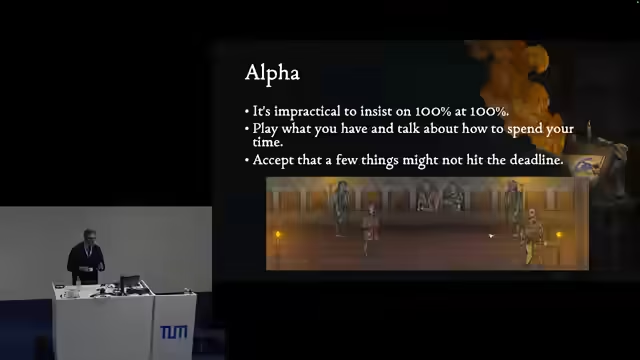
00:54:13 Das ist eine sehr commone Sache auf Game Development Teams, wo man sich die Hände an und man macht, und man macht es das. Man macht es sich an die Dinge, und man macht es sich an die Dinge, aber das gibt man keine Ahnung, was das ist wie. Wenn man durch die Hände, man sieht Dinge, die wirklich gut sind, und man sieht Dips, wie Sachen, die wirklich gut sind. Und man denkt, was das wirklich gut ist. Und man denkt, oh crap, wir haben komplett den Ball gemacht. Das ist wirklich rough.
00:54:40 Und wenn du einen Schaaf und ein Gefühl hast, dann sagst du, okay, es gibt drei Parts in der Spiel, die wirklich wirklich Weak sind, und zwei wirklich Kritikale Moments sind gut, aber wir können, wenn wir ein bisschen mehr Effort in den, können wir ihn aus der Park machen. Aber du musst den Perspektiven, dass die Team wirklich durch die ganze Spiel die ganze Spiel.
00:55:00 Also, accept that some of the stuff you're not gonna get done. You are not gonna get everything done, so you have to triage and you can say, you know what, this one thing, I'd like to do more on it, it's not gonna happen. Games are big. You can only do so much.
00:55:14 In our alpha, all of our dialogue was written, but it was not great. We had some real problems in our alpha. Many of our work animations were missing. So, for example, like, I'm raking, I'm sweeping, I'm chopping up a fish. You would have characters that are standing next to a fish, and you're like, okay, like, there's a fish there, there, there. Eventually, there's going to be chopping fish animation.
00:55:40 Und ein paar Jahre wurde dann geflucht, bis es nicht ideal ist, aber das war alles. Die Endsequenz war funktionierend, aber es war wirklich schwer. Es war viel squinting, es war viel, ich glaube, ich glaube, das kann auch sein, aber es ist nicht so, dass es jetzt. Wir haben auch Parallaxing. Parallaxing ist, wo die Background ist ein bisschen mehr als die Fronten in der Fronten ist, das gibt eine Art von Dept. Das war nicht so, dass die Szene nicht funktioniert.
00:56:08 Und ich war so viel besser mit dem Parallaxing, aber es war nicht mehr Zeit, und du musst es prioritize. Und ich sagte, wir können das in späteren. Ich wünsche es für Ship, aber es wird nicht passieren.
Feinschliff, neue Inhalte und Veröffentlichung
00:56:2000:56:20 So in beta, it's important to ask, what are you doing that is polish, and what are you doing that is new content? If there's an existing feature and you're making it better, that's polish. If it's a new character, a new quest, new dialogues, new features, that is not polish. You are making new things for the game. You should probably not be doing that unless there's like a real problem that demands it.
00:56:48 Das ist gesagt, die großen Probleme sind, die sich nicht zu brechen. Manchmal wird es durch die Spiel und sagen, das ist das, das ist unbearbeitet. Players werden das, die Leute will nicht zu lieben. Wir müssen die großen Barschen und wirklich mit den Schleuchern in die Handeln.
00:57:01 Wir haben die Begründung, die wir in der zweiten Phase haben, die wir in der zweiten Phase haben. Wir haben die Begründung, die die Charakter der Schauspieler war, die ich so sehr liebe, ich liebe es so viel. Und ich habe mich so, oh mein Gott! Und so, ich re-rote die ganze Sache. Wir haben die Accessibility Features, die das sehr wichtig sind, um uns zu erreichen, um die Widerzüge zu erreichen, die nicht die Rest der Content nicht verletzt, sondern sie einfach mehr zu einem Widerzüge.
00:57:28 Und ein paar unserer Fokus war auf der Localisation. Wir starten mit French, Italien, German und Spanisch. Dann wir localisiert mit Polish und Portugies. So, ein bisschen über die Releases. Wenn du niemals durch eine Game Release hast, ist es ein crazyer Zeit. Du wirst nicht wissen, wie es es geht.
00:57:46 Vielleicht, wenn es gut geht, vielleicht auch noch ein paar Plattformen. Für uns, wir haben es auch auf Playstation-Plattformen. Wir haben es auf Switch. Das war großartig für uns. Wir sahen, dass viele Leute auf PC-Tage spielen, auf Steam-Decks. Wir haben es gesagt, wir haben es auf Switch und viele Leute haben es.
00:58:05 Und wenn du gut technologie und gut Pipelines hast, dann über die Zukunft. Will du das wieder benutzen? Will du das wieder machen? Will du das gleiche wie du es gemacht hast? Wenn so, dann wird das eine Schritt weiter als du weiter weiterverlust.
00:58:21 Und wenn du gut bist, dann wiederum es wieder zu tun. Ich weiß, viele Leute wollen viele verschiedene Spiele machen, aber oft können Sie mehr Proficienz und Komfort machen, indem du das gleiche gemacht hast, in eine andere Art und auf die Überlegung auf deinem Wissen.
Netzwerk und Langfristperspektiven in der Spielebranche
00:58:38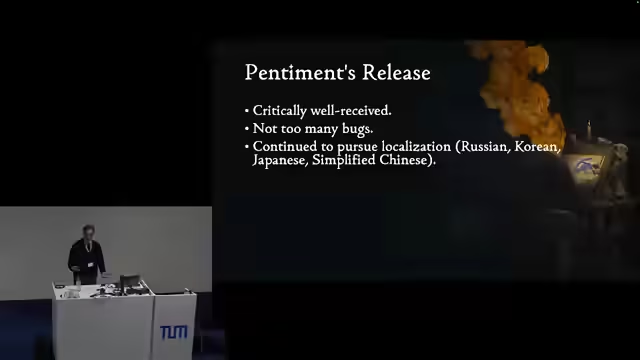
00:58:38 So I will say another thing. When teams disband, there's a lot of people in this room, and if, let's say all of you go out and you form three to five person teams, you can make a bunch of games, and then maybe those teams split up, or someone moves across the country, or they move to another country, but stay in touch with people. The game industry is, despite having so many thousands of people in it, it is quite small. I see people still that I worked with almost 30 years ago.
00:59:07 Almost every year in the strangest of places. People do stick around, or sometimes they leave and then they come back. It happens all the time. So if you don't work together again, stay in contact with people. Often they are incredible resources. You can be a resource to other people. They can be a resource to you to find help, to answer questions. The industry is very hard. I know I started off with a slide that was very dire, but...
00:59:35 Wenn Leute helfen sich, man kann viele Informationen finden, man kann Hilfe finden, man kann man weitergehen.
00:59:41 Wenn wir uns in der Folge haben, es war sehr gut, nicht zu viele Bugs. Ich denke, das ist auch weil wir bisher sehr viele Senior developers haben. Wir haben immer noch vieles zu verfolgen. Wir haben noch einen Ruhigen, Korean, Japanes und Simplifikaner. Ich war sehr froh, zu sehen, dass viele Korean streamer spielen. Und Korean streamer bought es, das ich fand, was crazy. Und es hat sich sehr gut gemacht.
01:00:09 Also, there were things that we did for accessibility because the game is so text-based, it was very important that the text was accessible to a wide audience and we were able to take those features and move them onto future projects. Thank you very much. I ran too long.
01:00:33 Vielen Dank. Das hat sich wieder super, super unglaublich gemacht. Wir haben so wenig Zeit. Wir haben drei Fragen, aber dann gehen wir und David will beherber uns zum Madness Sessions, um zu erfahren, zu erfahren, die Ihr Projekt. Und wir werden auch in der Mainz-Bültigen Station sein, um dann in der Mainz-Bültigen zu sprechen.
01:01:01 So, if you have further questions. So, we have three questions. Oh, this was a very fast one and very far away. Okay, I'm walking as fast as I can. Hi, very interesting talk. Thank you very much. My question was, Pentiment had a very niche audience and idea. And how did you manage the risk of the game not having, like, connecting with the audience?
Umgang mit Nischenpublikum und Risikomanagement
01:01:3801:01:38 Ich habe es gesagt, Pendiment hat eine sehr niche audience. Ja, wie du es manage, wie du es manage, die risk von es zu connecten? Oh, okay. So, die Frage war, Pendiment hat eine sehr niche audience. Wie wir die risk von es nicht connecten mit der Audience? Das ist eine gute Frage. Ich denke, es war wichtig für uns zu erkennen, dass unsere Audience war primarily, die
01:02:07 Don't play games. In reality, we were focusing on people who love history, mysteries, art history, things like that. We mitigated that... Discoverability, I will say, is always an issue, especially now for indie games. One of your biggest challenges is 99% of games that come out on Steam are indie games, so discoverability is a huge issue. For us, the way we manage the risk of our audience not...
01:02:36 wie es gut zu machen, ist es zu machen, es einfach zu spielen und einfach zu spielen. Es ist nichts hart oder kompliziert oder wirklich schwieriger, über es. Es ist mostly über die Erfahrung und über die Erfahrung und über die Erfahrung.
01:02:51 So, how the controls work, how dialogue works, it's all made for someone. And it was in fact played by a lot of people who don't play games at all. We did, I did interviews with, for example, people like historians. I worked with medievalists. And it's weird because you're sort of, you're working with people who are reaching the audience that is not the game's audience. And it...
01:03:17 Obviamente wir waren bei der Partie von Xbox, aber da waren viele Leute, die, zum Beispiel, die, wie eine Historikerin, die spezialisiert in Medieval Manuscripts, die sie auf ihren Podcasts hören und sie hören über diese Game. Und sie kommen nicht zu ihren Podcast, weil sie sie lieben, sie kommen zu den Subjekt-Mattern interessieren. Aber dann sind sie, ich werde das Game spielen. Es sieht gut aus, es sieht gut aus, es sieht gut aus, es sieht gut aus, es sieht gut aus, es sieht gut aus, es sieht gut aus, es sieht gut aus.
01:03:45 So, that's kind of how we did it. But I do think, I will say, I don't want to minimize the effect that being part of Microsoft is. It would be stupid for me to say, like, oh, I just did it. It was easy.
01:03:59 Okay, der zweite Frage. Wir haben zwei weitere Fragen. Ich würde Sie kommen zu mir, weil ich nicht mit euch und euch kommen kann, weil ich nicht, unfortunately, den Mic in der Presse benutze. Wir müssen hier in der Körner mingeln. Und dann haben wir zwei Fragen.
Barrierefreiheit und Finanzierungsmodelle
01:04:26
01:04:26 Test, test. Okay. Thank you for the talk. One thing that really interests me is the fonts. And it was one of my favorite parts of the game and the text effects and everything. One thing that really caught me in the talk, like you said that you tackled accessibility in reading just in the beta phase. Was that one of those things that, as you put it...
01:04:53 Was hat sich in der Karte und ein Beta-Tester kam in und sagte, ich kann nicht die Fonds nicht, die Effekte sind zu prominent, ich kann nicht die Letters nicht, oder was ist das, was du von der Start und dann in der Beta-Phase gesagt hast? Ich habe nicht über das, weil ich ein ganzes Talk über die Fonds in Pentiment habe. So Pentiment hat sechs Custom Fonts.
01:05:20 Das war eine Studie. Sie arbeiten in 280 Sprachen, also sind sehr komprehensiv. Und sie sind historisch-basiert. Aber sie sind sehr antiquated-looking. Und wir haben vieles zu machen, dass sie so vieles zu machen. Wir haben auch eine Easy-Read-Mode. Weil einige Spieler sehen, wie ein gothic-script ist und sie sagen, ich kann nicht das. So die Easy-Read-Mode, die ihr prompt habt, und sie sagen...
01:05:47 Kann du das? Ist es okay für dich? Wenn so, dann würde ich es gerne spielen. Aber wenn es das ist, dann einfach so einfach zu dieser Version. Wir haben Text Scaling, wir haben High Contrast. Ich war zu Johanna und andere Leute, dass in Testung, wir haben zu Gamescom und da war ein Spieler, der in line ist, und ich sah ihn in line mit dem Phone. Er hat Glasses, das war so thick, und er war das.
01:06:13 Und ich dachte, oh, das ist zu sein. Und er ging auf und er ging die Spiel um das zu close zu sein und er war zu haben. Und so, wir haben vieles Zeit, aber es war nicht genug. So, wir dann gesagt, okay, wir haben die Accessibility Lab. Microsoft hat eine sehr gute Accessibility Lab. Und wir haben gesagt, kann man das in fronten von Leuten, die haben visual und reading-schallenge und haben sie geben, so wir können die Spielverlösen. So, Accessibility...
01:06:41 ist nicht etwas, dass du erst mal starten kannst. Du sollst es sofort machen, und dann als du es, du hast Feedback und dann noch mehr. Und weil unsere Game hat keine VO-Volfe, war es wirklich wichtig, dass die Texte zu sein muss. Without die Texte, du kannst du die Game spielen. Wir haben Text-to-Speech-Test, in dem wir eine Implementation hatten und es war nicht gut genug, also wir haben eine Implementation gemacht.
01:07:07 Hi, so I'm really interested in how the funding works in a small team like that and specifically how do you ensure that the teammates get paid on a monthly basis and let's say when we hire other contractors is that a fixed pay and if so how do you manage that with the I would assume a smaller funding for the entire team? That is a good question. I don't think I have expertise on it because the easy answer is that
01:07:35 Wir sind ein Microsoft- und wir sind ein Xbox-Studio. Die Art von der Art von der Art von der Art von der Art von der Art von der Art von der Art von der Art von der Art von der Art von der Art von der Art von der Art von der Art von der Art von der Art von der Art von der Art von der Art von der Art von der Art von Art von der Art von Art von Art von Art von Art von Art von Art von Art von Art von Art von Art von Art von Art von Art von Art von Art von Art von Art von Art von Art von Art von Art von Art von Art von Art von Art von Art von Art von Art von Art von Art von Art von Art von Art von Art von Art von Art von Art von Art von Art von Art von Art von Art von Art von Art von Art von Art von Art von Art von Art von Art von Art von Art von Art von Art von Art von Art von Art von Art von Art von Art von Art von Art von Art von Art von Art von Art von Art von Art von Art von Art
01:07:57 You have to work out how the timing and disbursement of that works. But usually the way that money comes in is it's based on a mix of you get paid a certain amount upfront and then you have production milestones that go on over the course of the game. If you hit those milestones and the publisher is not being a jerk, then you get more money and that's how you support the team over the long term. But it's something that thankfully I have not had to deal with in a very long time because I've been part of Obsidian for 20 years. So I'm sorry that I can't be of more help.
01:08:27 Vielen Dank.
01:08:51 ist ein bisschen ein bisschen ein bisschen von der Art von der Art und vielleicht auch inspiriert, wie immer, als wir sprechen. Vielen Dank für die ganze Zeit. Vielen Dank. Danke. Der Rest des Talks ist alles über Sie und Ihr Projekt. Ich bin super excited, dass David jetzt über die crazy-madness Session wird. Wir haben jetzt die große-madness Session, um zu hören über Ihre Projekte. Und dann werden wir zur Hauptstadt-Bültigung gehen, um zu sehen, Ihre Projekte. Wir werden da auch noch mal wieder sein.
01:09:25 So, if you have any follow-up questions. But now I am super excited to hand over to David. And also at this very moment, I really want to thank the wonderful team here, who actually was able to organise the Demo Day and everything which is surrounding this event. So also a little bit of applause for the fantastic team here.